THOR Air Classifier
A spinning cage that splits fine from coarse at a sharp cut point.
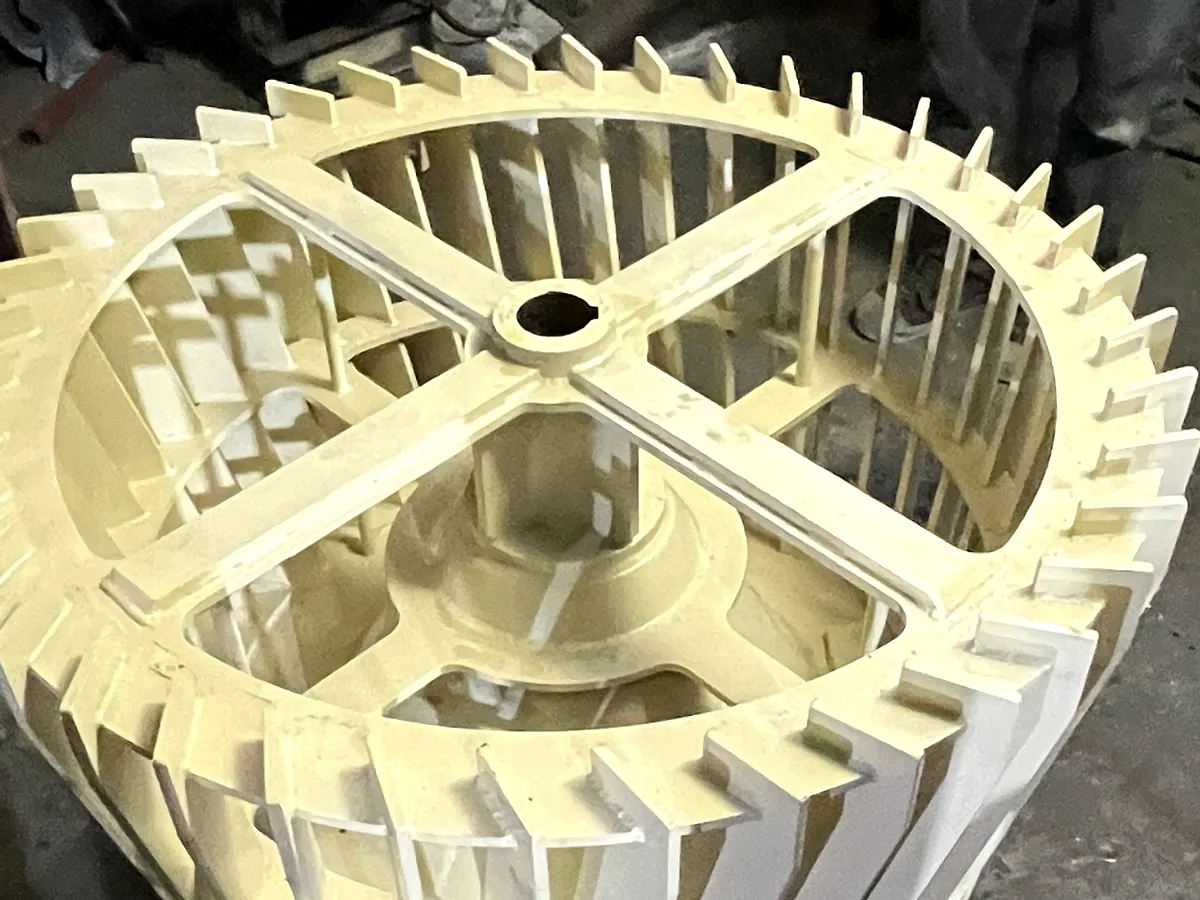
Not a mill — a gatekeeper
A slotted wheel spins against an upward airflow. Fine particles ride the air through the slots; anything too heavy is flung back out by centrifugal force and returns for regrinding.
- Mechanism
- Centrifugal cut
- Fineness
- D97 3 – 200 µm
- Capacity
- 0.5 – 20 t/h
Working principle
Wheel speed sets the cut point — turn it up for finer, down for coarser, while the line keeps running. Paired with any mill it sharpens the whole plant's size spec.
What the material passes through
- 1Feed inletPowder disperses into the rising air stream
- 2Classifier wheelVariable-speed cage — the cut-point control
- 3Secondary air vanesWash misplaced fines off the coarse stream
- 4Fines outletOn-spec product rides the air to the cyclone
- 5Coarse return coneRejected oversize drops back to the mill
What is an Air Classifier?
An air classifier is an industrial dynamic dry-powder separation machine that uses aerodynamic drag and centrifugal force to separate fine particles from coarse particles.
As a specialist air-classifier supplier, THOR by CI designs these systems for a cleaner, sharper, more consistent cut point than traditional physical mesh screens — especially with fine, cohesive or highly abrasive materials down to single-digit-micron ranges. It elevates plant efficiency, narrows PSD and eliminates the physical limits of mechanical screening.
Where the classifier sets the cut
Standalone, or built in
Run it as an independent process station, or mount it directly inside the mill — two ways to sharpen the same cut.
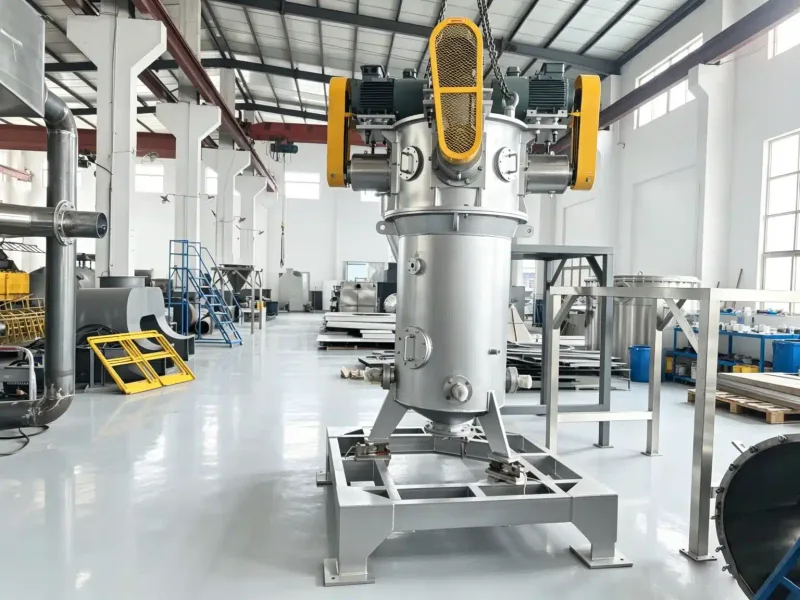
Stand-alone air classifier (THOR-AC Series)
An independent process station downstream of any secondary grinding mill — Ball, Pin or Hammer. Material is fed in via pneumatic conveying lines or gravity chutes. Primary advantages: highest separation yield efficiency (92%); a dedicated auxiliary intake fan precisely tunes the air-to-solid ratio; easy retrofit into existing plant lines — no change to the primary mill.
Integrated / in-mill classifier (THOR-IC Series)
Mounted directly inside the primary milling chamber — typically the upper zone of the THOR-JM Jet Mill or specialized Hammer Mills — forming a single integrated unit. Primary advantages: extremely compact plant footprint; eliminates external conveying lines and collectors between mill and classifier; instantly recirculates coarse rejects into the grinding zone — preventing over-grinding and cutting energy per ton.
Advantages & limitations
A sharper cut than any screen — provided the feed is milled and dry.
Advantages
Modular standalone versatility
Integrates into any grinding circuit — Hammer, Pin or Ball — of any brand.
Precise cut-point control (D97)
Adjustable wheel speed shifts the target top-cut anywhere from 3 µm to 200 µm.
High wear protection
Optional alumina-ceramic, silicon-carbide or polyurethane coatings for abrasive minerals.
High recovery yields
Optimized internal aerodynamics keep fines off the coarse fraction — up to 92% efficiency.
Limitations to plan for
Requires upstream grinding
It separates, it doesn't reduce — a pre-milled feed is required.
Moisture sensitivity
Above ~3% moisture, particles agglomerate — reducing efficiency and cut-point accuracy.
Cost of auxiliary fans
High separation velocities need high-pressure exhaust fans, raising capital and power cost.
How it sits against the other four
| Spec | Pin Mill | Hammer Mill | Jet Mill | Ball Mill | Air Classifier |
|---|---|---|---|---|---|
| Mechanism | Impact · screenless | Impact + screen | Fluid energy | Attrition + impact | Centrifugal cut |
| Fineness | 20 – 200 µm | 200 µm – 5 mm | D50 1 – 10 µm | 20 – 200 µm | D97 3 – 200 µm |
| Capacity | 10 kg/h – 10 t/h | 2 – 25 t/h | 20 – 800 kg/h | 0.65 – 80 TPH | 0.5 – 20 t/h |
| Strength | Narrow size spread | Rugged throughput | Finest, contamination-free | Wet or dry, hard feeds | Sharp cut point |
| Best for | Food, pharma, soft chemicals | Grain, biomass, ore | API, pigment, ceramic | Clinker, minerals, refractory | Downstream of any mill |
Technical specifications & model range
Five wheel sizes. Final sizing is confirmed after pilot trials with your actual feed material.
| Model | Rotor wheel diameter | Motor power | Shell speed | Capacity |
|---|---|---|---|---|
| TH-AC-100 | Ø100 mm | 2.2 kW | 36 – 38 rpm | 0.65 – 2 TPH |
| TH-AC-200 | Ø200 mm | 5.5 kW | 36 rpm | 1.5 – 4.8 TPH |
| TH-AC-315 | Ø315 mm | 11 kW | 29.7 rpm | 2 – 5 TPH |
| TH-AC-450 | Ø450 mm | 22 kW | 25.4 rpm | 4 – 10 TPH |
| TH-AC-630 | Ø630 mm | 45 kW | 21.7 rpm | 15 – 28 TPH |
Specifications are typical and subject to change. Final sizing confirmed after pilot trials with your feed material.
Turn it around yourself
The production machine, modelled from the SolidWorks assembly — drag, orbit and zoom into it right on this page.
What we keep on the shelf for you
Every wear part is made in Nonthaburi and ships immediately, backed by our own service crew.
- Classifier wheelsBalanced, ceramic-bladed option
- Wheel bladesReplaceable one by one
- Wear linersAlumina tile or PU
- Shaft sealsAir-purged for fine powders