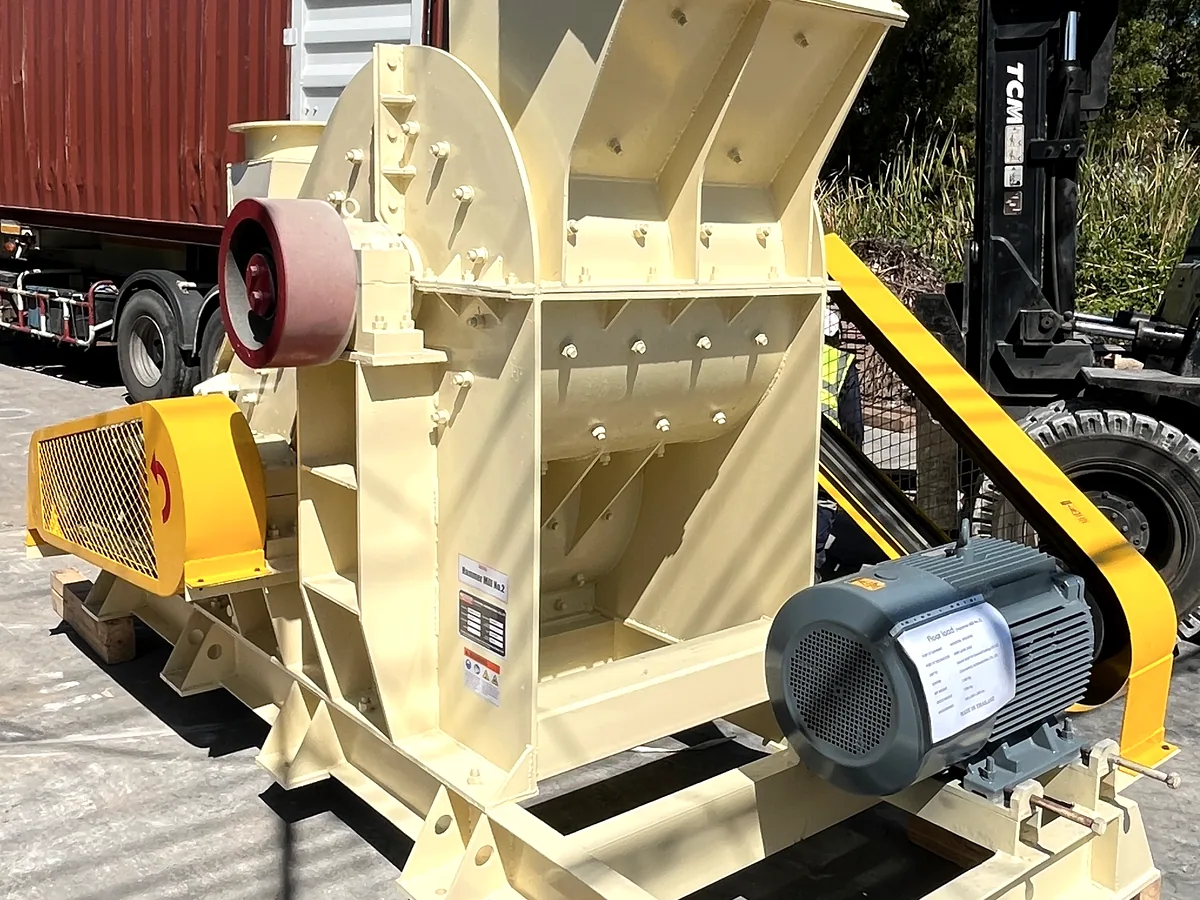
Swinging hammers against a screen
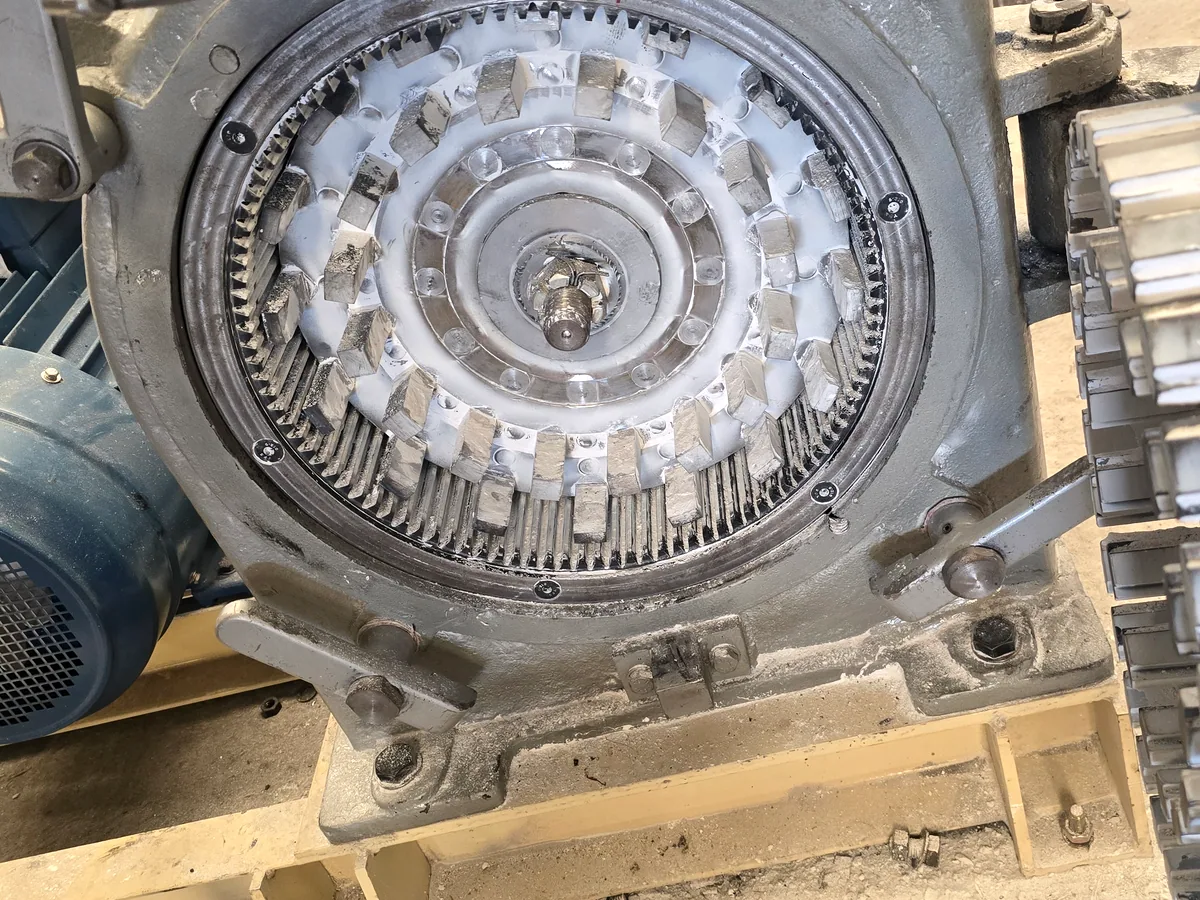
A rotor carries rows of swinging hammers that strike the feed against breaker plates, then hold it against a perforated screen until it is small enough to pass.
- Mechanism
- Impact + screen
- Fineness
- 200 µm – 5 mm
- Capacity
- 2 – 25 t/h
Working principle
The screen is the product setting: swap it in minutes to change the output size. Reversible hammers and bolt-in liners make it the workhorse for grain, biomass, salt and ore.
What the material passes through
- 1Feed inlet with magnetCatches tramp metal before it reaches the rotor
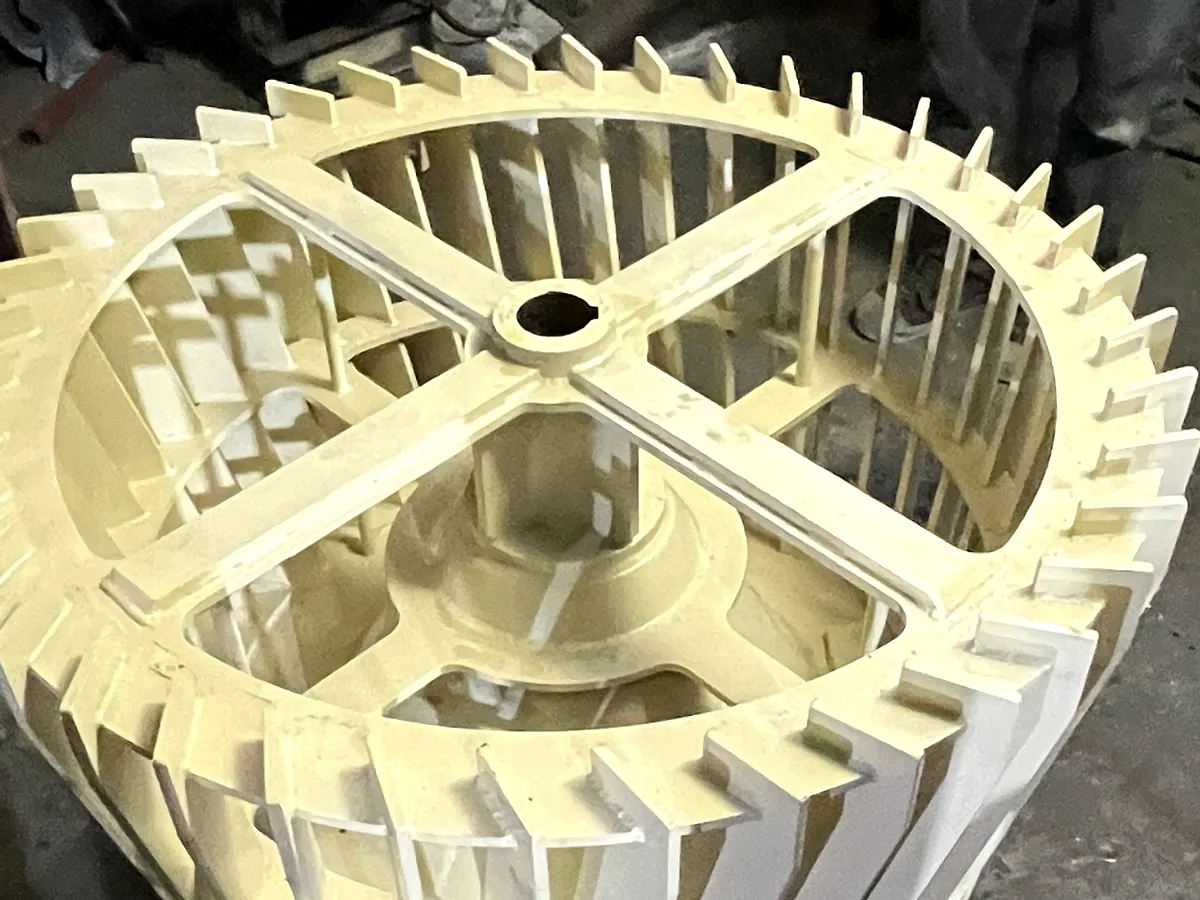
- 2Rotor & swinging hammersReversible hammers deliver the primary impacts
- 3Breaker plates / linersBolt-in wear surfaces the feed shatters against
- 4Perforated screenSets the top size — only small enough particles pass
- 5Discharge chuteGravity or pneumatic take-away to the next stage
What is a Hammer Mill?
A hammer mill is a high-speed mechanical impact pulverizer that crushes, grinds and pulverizes a wide array of materials into fine and medium-coarse powders. It sits in the category of intermediate and fine comminution equipment, and — unlike pressure-based crushers — uses dynamic kinetic energy transfer rather than slow compression to fracture particles.
For operators seeking a robust heavy-duty industrial hammer mill, this is the primary workhorse across the agricultural, chemical, mineral and waste-recycling industries, prized for its versatility and high-throughput capacity. Every THOR-HM unit is built to a customer's process and sized after a pilot run with your actual feed material.
Where Hammer Mill sits on the particle-size scale
Advantages & limitations
What the THOR-HM does exceptionally — and where the physics of mechanical impact sets a ceiling.
Advantages
Maximum wear efficiency
Proprietary tungsten-carbide hard-facing overlays keep grinding edges sharp up to 300% longer than standard steel hammers.
Vibration-dampened frame
A reinforced steel baseplate with isolation pads eliminates the need for expensive reinforced-foundation civil works.
Optimized airflow management
Internal aerodynamics minimise turbulence — lowering motor power draw and maximising throughput per kWh.
Direct air-classifier compatibility
A pre-engineered modular flange connects straight to THOR-AC classification loops — no mechanical screen needed for fine or sticky materials.
Limitations to plan for
Sieve-screen limitation
As a stand-alone unit with fine screens (<150 µm), moist or greasy feeds can blind the screen — cutting throughput and overheating.
High acoustic emissions
Steel-on-hard-material impact often exceeds 85 dBA, requiring acoustic insulation jackets in close-quarter factories.
Thermal heat build-up
Prolonged dry milling of thermoplastic or heat-sensitive feeds can cause melting or caramelization from friction heat.
Milling, mixing & bulk handling
The THOR-HM Series drops into automated plant layouts and couples cleanly to downstream conveying and classification.
Pneumatic conveying loops
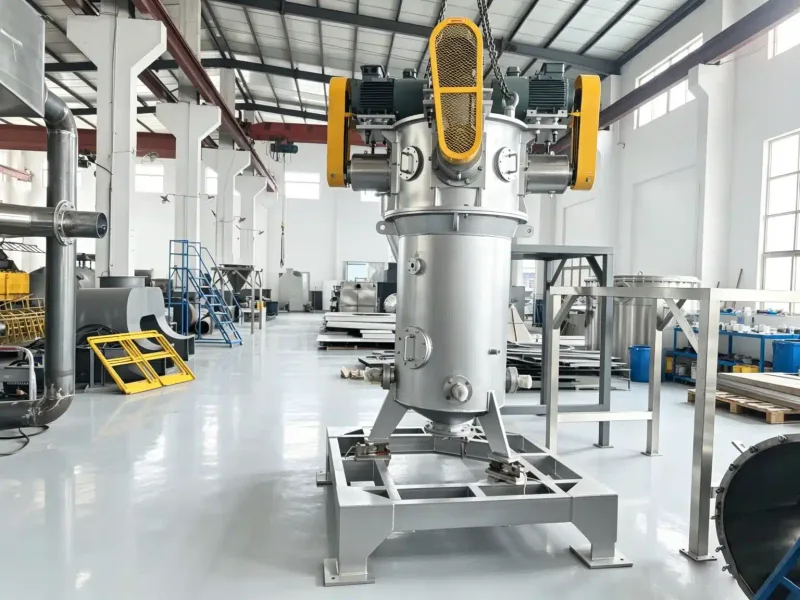
Configure the mill as a hammer-mill-with-cyclone system: a negative-pressure blower pulls milled powder through the screen — cooling the material and conveying it dust-free to a rotary airlock valve.
Modular THOR-AC coupling
For ultra-fine minerals, remove the sieve screen entirely: unscreened output is conveyed to the THOR-AC Air Classifier, which separates fine product and returns oversize to the feed inlet in a closed loop.
How it sits against the other four
| Spec | Pin Mill | Hammer Mill | Jet Mill | Ball Mill | Air Classifier |
|---|---|---|---|---|---|
| Mechanism | Impact · screenless | Impact + screen | Fluid energy | Attrition + impact | Centrifugal cut |
| Fineness | 20 – 200 µm | 200 µm – 5 mm | D50 1 – 10 µm | 20 – 200 µm | D97 3 – 200 µm |
| Capacity | 10 kg/h – 10 t/h | 2 – 25 t/h | 20 – 800 kg/h | 0.65 – 80 TPH | 0.5 – 20 t/h |
| Strength | Narrow size spread | Rugged throughput | Finest, contamination-free | Wet or dry, hard feeds | Sharp cut point |
| Best for | Food, pharma, soft chemicals | Grain, biomass, ore | API, pigment, ceramic | Clinker, minerals, refractory | Downstream of any mill |
Specifications
Six frame sizes from bench-scale to heavy industrial. Final sizing is confirmed after pilot trials with your actual feed material.
| Model | Rotor diameter | Motor power | Rotor speed | Capacity |
|---|---|---|---|---|
| TH-HM-150 | Ø150 mm | 1.5 – 2.2 kW | 1500 – 4500 rpm | 10 – 50 kg/h |
| TH-HM-300 | Ø300 mm | 5.5 – 7.5 kW | 1200 – 3600 rpm | 100 – 300 kg/h |
| TH-HM-500 | Ø500 mm | 15 – 25 kW | 1000 – 3000 rpm | 500 – 1500 kg/h |
| TH-HM-800 | Ø800 mm | 45 – 55 kW | 800 – 2400 rpm | 2000 – 4000 kg/h |
| TH-HM-1000 | Ø1000 mm | 90 – 100 kW | 600 – 1800 rpm | 5000 – 10000 kg/h |
| TH-HM-1200 | Ø1200 mm | 160 – 200 kW | 500 – 1500 rpm | 15000 – 25000 kg/h |
Specifications are typical and subject to change. Final sizing confirmed after pilot trials with your feed material.
Turn it around yourself
The production machine, modelled from the SolidWorks assembly — drag, orbit and zoom into it right on this page.
What we keep on the shelf for you
Every wear part is made in Nonthaburi and ships immediately, backed by our own service crew.
- Hammer setsManganese or carbide-tipped
- ScreensFull range of hole sizes in stock
- Breaker platesBolt-in, no welding needed
- Rotor bearingsMatched sets with seals