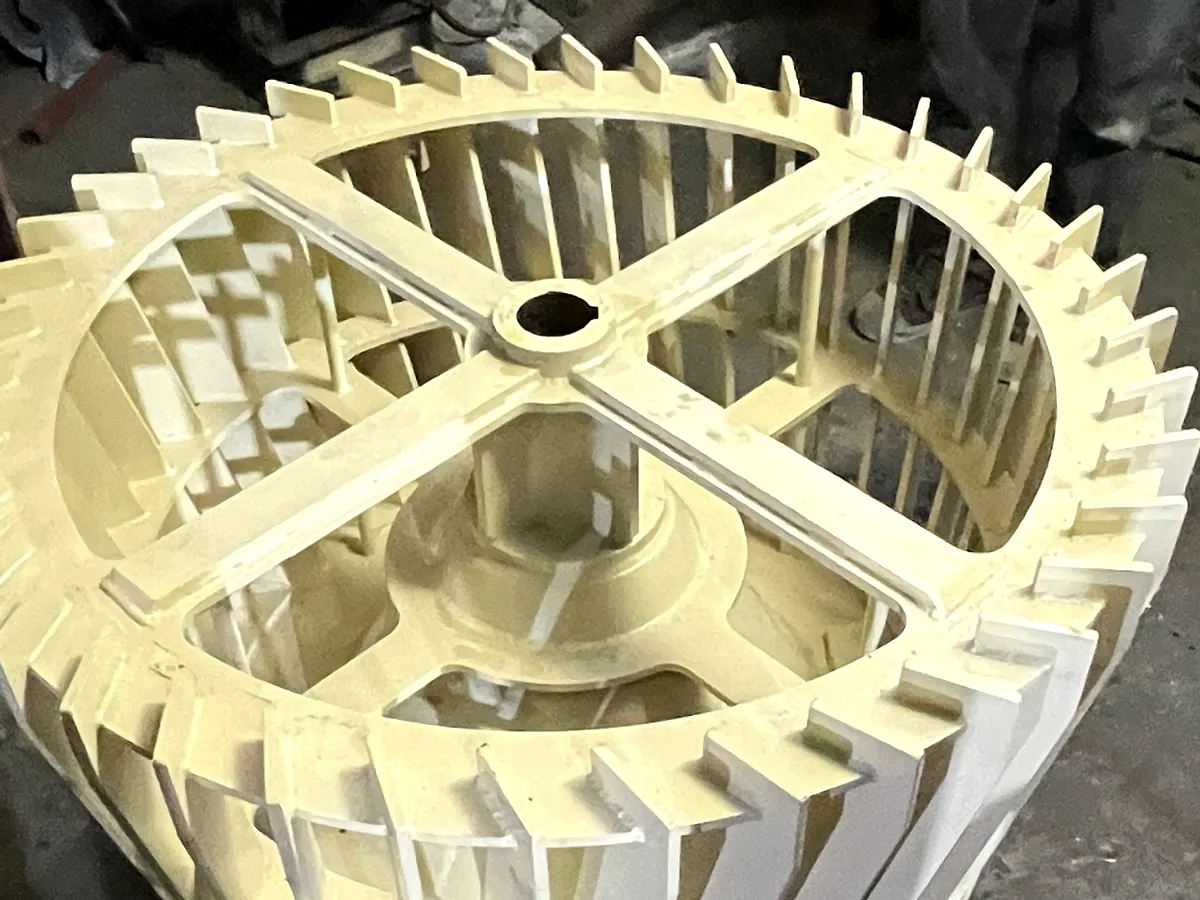
The technology inside the Hammer Mill
Impact · screened — how it works, the equations we size it with, and what can be adjusted.
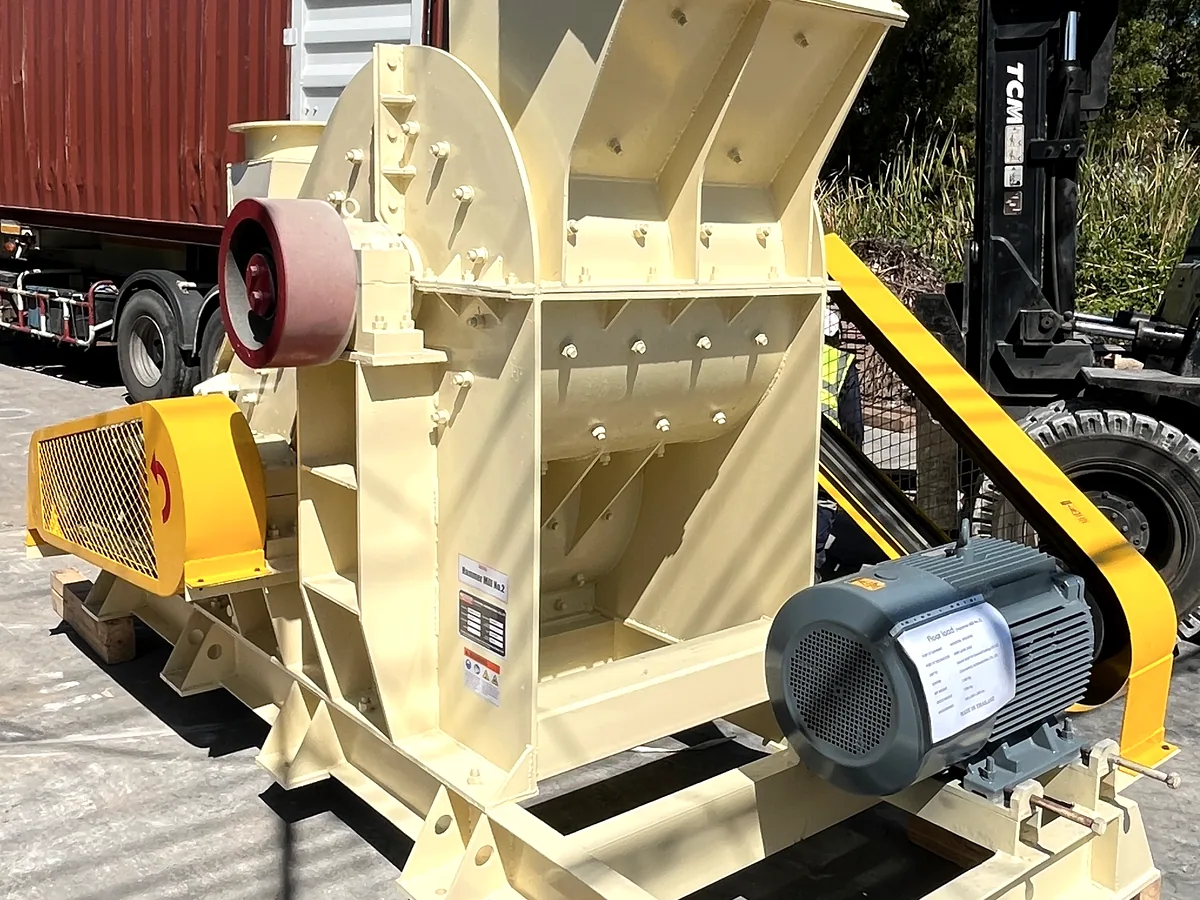
Hammer Mill
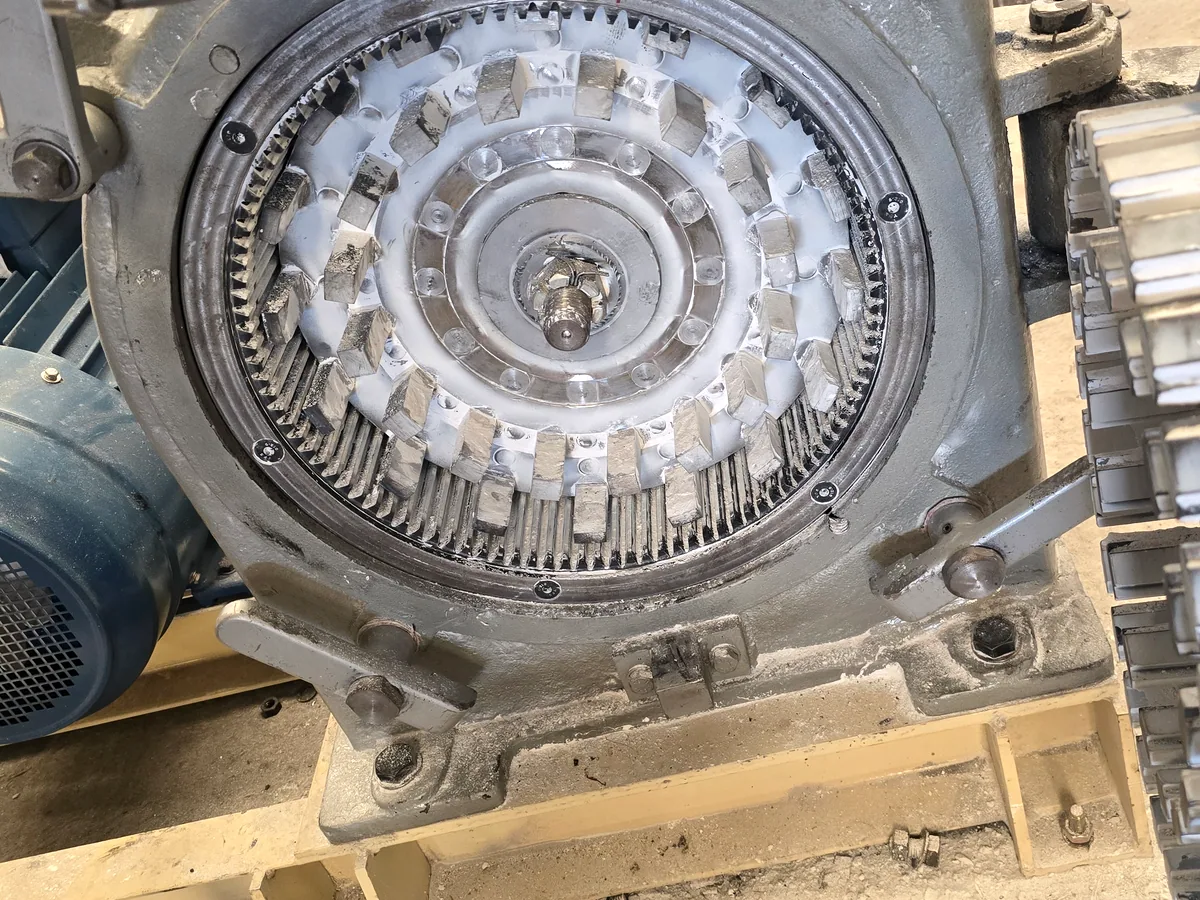
A rotor carries rows of free-swinging hammers inside a chamber lined with a perforated screen. Material is struck, thrown against the liner, and struck again until it can pass the aperture.
- 01Feed drops into the top of the chamber through a rate-controlled inlet.
- 02Hammers swing out under centrifugal force and strike the feed at up to 110 m/s.
- 03Fragments hit the breaker plate and are reduced further by attrition against the screen.
- 04Only particles smaller than the aperture leave; the rest stay in circulation.
The screen sets the ceiling, the hammers set the rate
Product top size is fixed by the screen aperture — it is a mechanical limit, not a statistical one. What the hammers control is how quickly material reaches that size, and therefore the energy drawn per tonne.
We size the drive from Bond's law, which relates the energy needed to the feed and product sizes through the material's work index — the same number that tells us how fast the hammers will wear.
- Bond work index — specific energyW = 10 · Wi · (1/√P₈₀ − 1/√F₈₀)
- W
- specific energy (kWh per tonne)
- Wi
- Bond work index of the material
- F₈₀ / P₈₀
- feed and product size at 80 % passing (µm)
Motor rating comes straight from W multiplied by the target tonnage.
- Hammer tip speedv = π · D · n / 60
- v
- tip speed (m/s) — 60 to 110 m/s typical
- D
- swing diameter over the hammers (m)
- n
- rotor speed (rpm)
High v for fine grinding, low v for friable feeds that shatter too easily.
Tuned to your material
- AdjustInterchangeable screensApertures from 0.2 to 12 mm swap in minutes, moving the product band without touching the rotor.
- AdjustHammer count and pattern32 to 96 hammers; more for fine work, fewer for sticky or high-moisture feeds.
- AdjustReversible rotorRunning the other way puts a fresh edge on every hammer and doubles the interval between changes.
- UpgradeHigh-chrome linersReplaceable wear plates on every strike face, changed without pulling the rotor.
- UpgradeTramp-metal trapA magnetic pocket ahead of the rotor catches bolts and scrap before they reach the hammers.
- UpgradeHinged chamberThe housing swings open for screen changes and jam clearing in minutes rather than hours.